UDL: Universal Design for Learning in
Co-Teaching
What is Universal Design for Learning?
Universal Design for Learning (UDL) is a framework that helps teachers design instruction that is accessible to all students from the start. Instead of adjusting lessons after students struggle, UDL encourages teachers to plan proactively by offering multiple ways for students to access content, engage in learning, and demonstrate understanding (CAST, 2018).
In an Integrated Co-Teaching (ICT) classroom, UDL is especially important because students come with a wide range of strengths, needs, and learning styles. By embedding flexibility into instruction, both the general education teacher and special education teacher can ensure that all students are able to participate meaningfully in the lesson.
Why UDL Matters in Co-Teaching
UDL supports co-teaching by providing a shared framework for designing inclusive instruction. It allows both teachers to plan lessons that meet diverse needs from the beginning, reduce barriers to learning, and increase student engagement and independence (CAST, 2018). When UDL is used effectively, support is built into the lesson, not added on after, which aligns directly with the goals of co-teaching.
In my classroom, UDL is part of how we plan and teach every day. Both teachers work together to provide clear models, break down tasks, and offer multiple ways for students to participate. When these supports are built into the lesson, students are more confident, more engaged, and more successful.
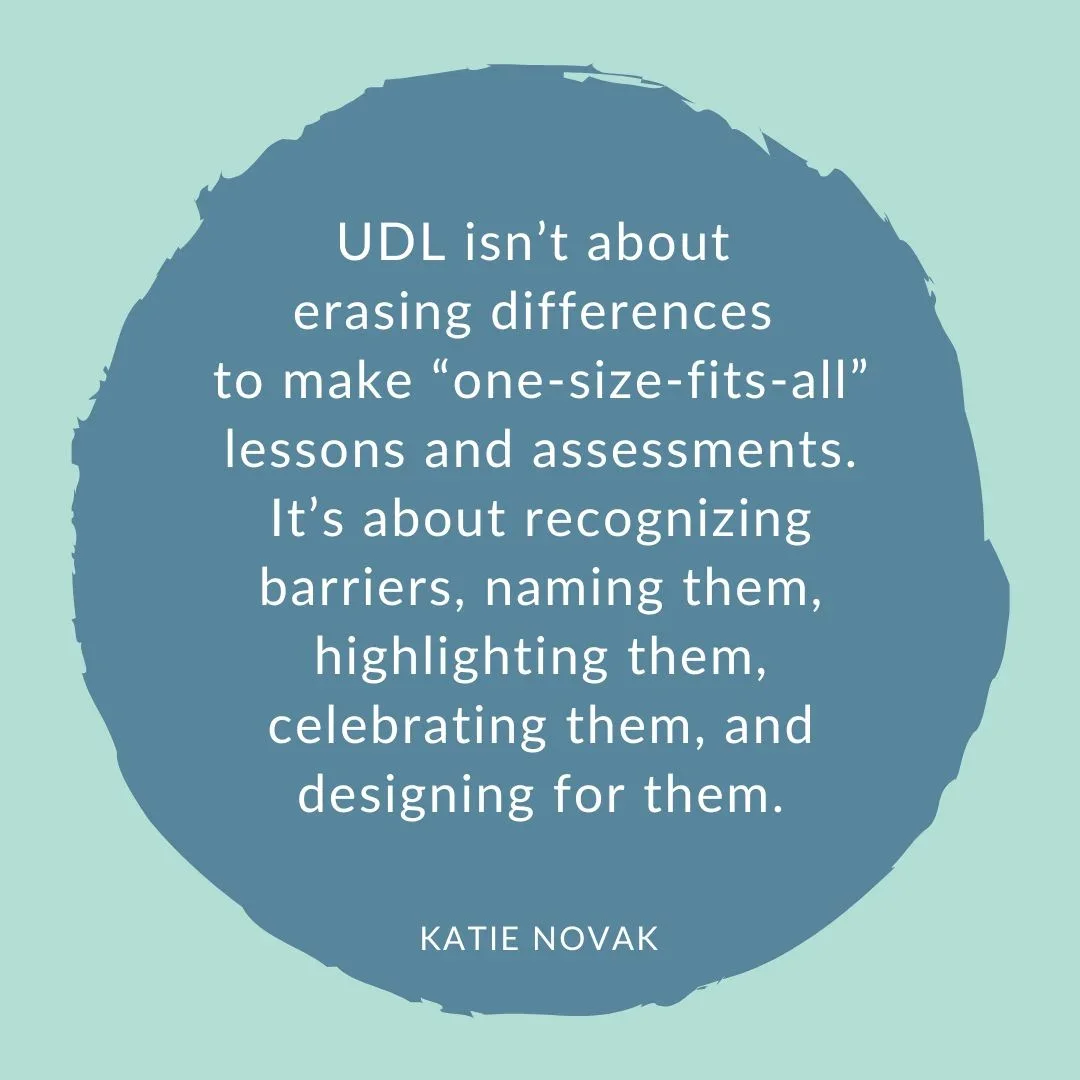
“Barriers to learning are in the design of the environment, not in the students.”
— CAST
The Three Principles of UDL
The CAST framework is built on three core principles (CAST, 2018):
1. Multiple Means of Representation
How do your students access information?
Students learn in different ways, so information should be presented in multiple formats (CAST, 2018).
In a Co-Taught Classroom:
One teacher models while the other provides visuals or examples
Use anchor charts, images, and graphic organizers
Provide written and verbal directions
Break down complex information into smaller steps
2. Multiple Means of Action & Expression
How do your students learn?
Students should have different ways to demonstrate understanding (CAST, 2018).
In a Co-Taught Classroom:
Allow students to write, speak, draw, or use visuals
Provide sentence starters and structured supports
Offer guided and independent options
Use small groups for targeted support
3. Multiple Means of Engagement
How do your students stay motivated and involved?
Students are more successful when they are interested and feel connected to the learning (CAST, 2018).
In a Co-Taught Classroom:
Offer choices when possible
Connect lessons to student experiences
Use collaborative activities and discussions
Build strong relationships and classroom community
Classroom Environment
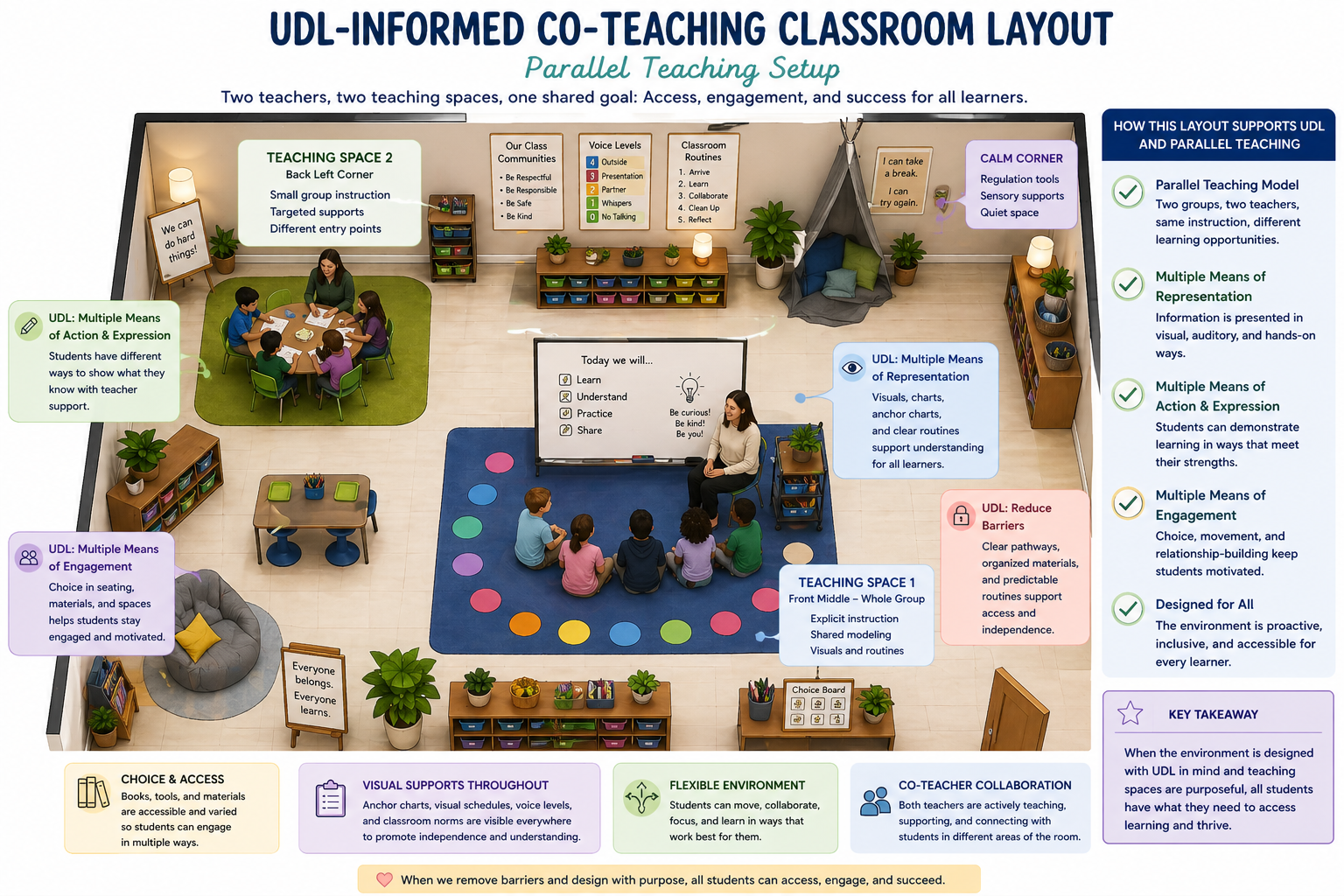
The classroom environment is a critical component of effective co-teaching in an Integrated Co-Teaching (ICT) setting. How a classroom is structured directly impacts student engagement, behavior, and access to instruction. For new co-teachers, it is important to recognize that the physical space is not just where learning happens—it is an active part of instruction that supports collaboration, clear routines, and flexible groupings. This layout is intentionally designed to support a parallel teaching model while incorporating principles of Universal Design for Learning (UDL). The space includes two clearly defined teaching areas to reduce distraction and increase focus. In the front middle of the room, a whole-group instruction area centered around a rug and whiteboard allows one teacher to lead direct instruction with strong visuals and routines, while a smaller teaching station in the back left corner provides a quieter space for targeted small-group instruction.
At the same time, the classroom reflects UDL principles by embedding flexibility, accessibility, and engagement throughout the environment (CAST, 2018). Visual supports, clearly organized materials, and predictable routines help reduce barriers to learning and promote independence, while flexible seating and designated areas for independent work and regulation provide students with multiple ways to engage with the lesson. This thoughtful design allows both teachers to actively lead instruction in different parts of the room while supporting diverse learners without removing them from the classroom. The environment itself becomes a tool for instruction, ensuring that all students can access, participate, and succeed within a shared, inclusive learning space.