Co-Teaching Models: Foundations of Co-Teaching in an ICT Classroom
What is Co-Teaching?
In an Integrated Co-Teaching (ICT) classroom, one general education teacher and one special education teacher work together to plan, instruct, and assess a diverse group of students within the same learning environment. This model is rooted in the belief that all students regardless of ability, language, or learning needs should have access to grade-level curriculum alongside their peers. Co-teaching is not simply two teachers sharing a space. It is a structured, intentional partnership built on shared responsibility, mutual respect, and a commitment to inclusion.
The Purpose of Co-Teaching
The goal of co-teaching is to increase access, not just provide support. In an effective ICT classroom, both teachers work together to:
Ensure all students can access grade-level content
Provide differentiated instruction in real time
Reduce barriers to learning
Promote independence and confidence
Create a classroom community where all students feel they belong
Co-teaching allows instruction to be more responsive. Instead of waiting for students to fall behind, support is embedded into the lesson as it is happening.
Co-Teaching as a Model for Inclusion
Co-teaching is a key structure for inclusive education. Inclusion means more than physical placement—it means meaningful participation, access, and belonging.
Scholars such as Mara Sapon-Shevin emphasize that inclusive classrooms should actively reduce stigma and ensure that all students are valued members of the learning community. In an ICT classroom, this is achieved by:
Teaching all students together rather than separating groups
Providing supports within the classroom environment
Valuing diverse ways of learning and expressing understanding
When done well, co-teaching shifts the focus from “fixing students” to improving access to instruction.
Co- Teaching Models
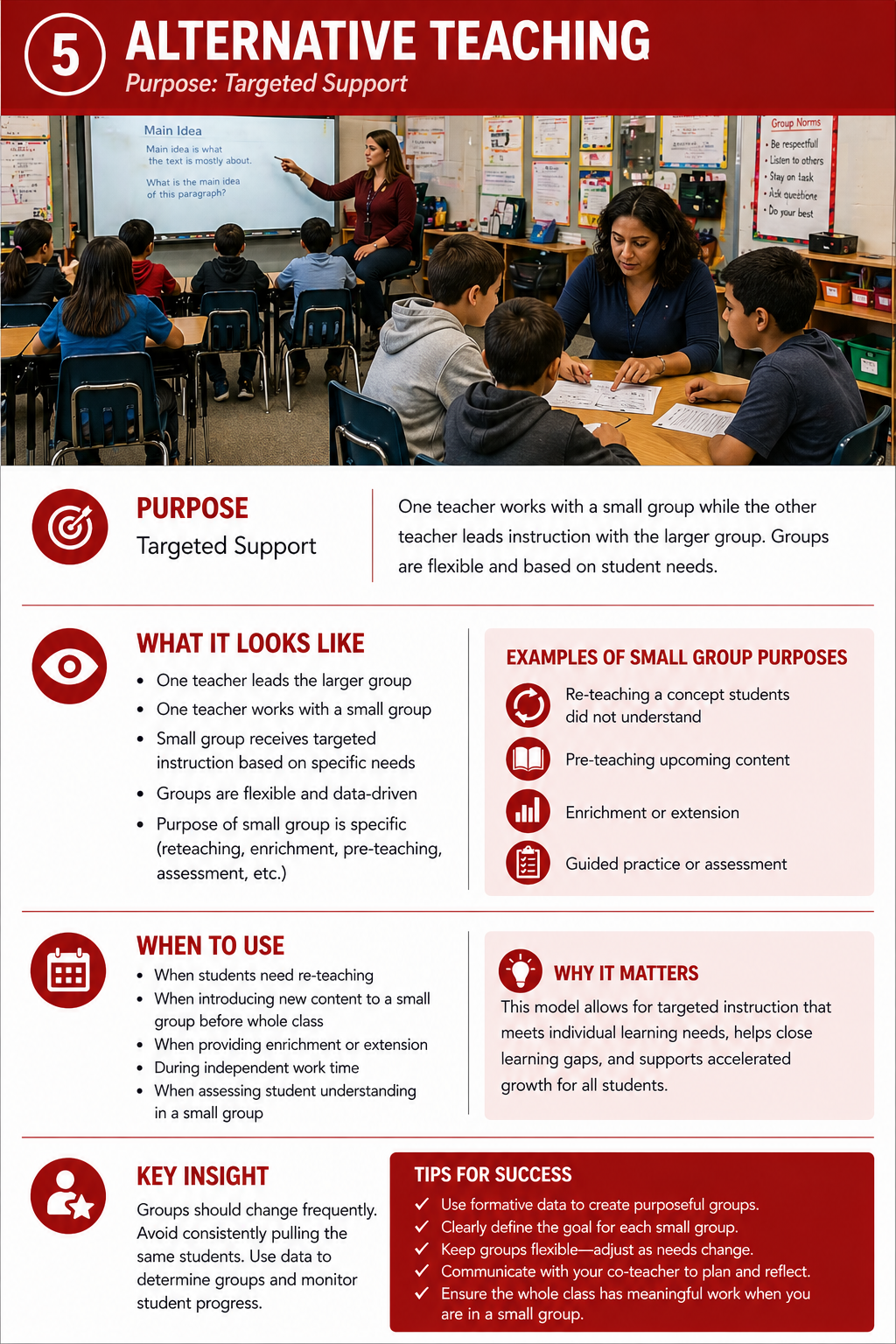
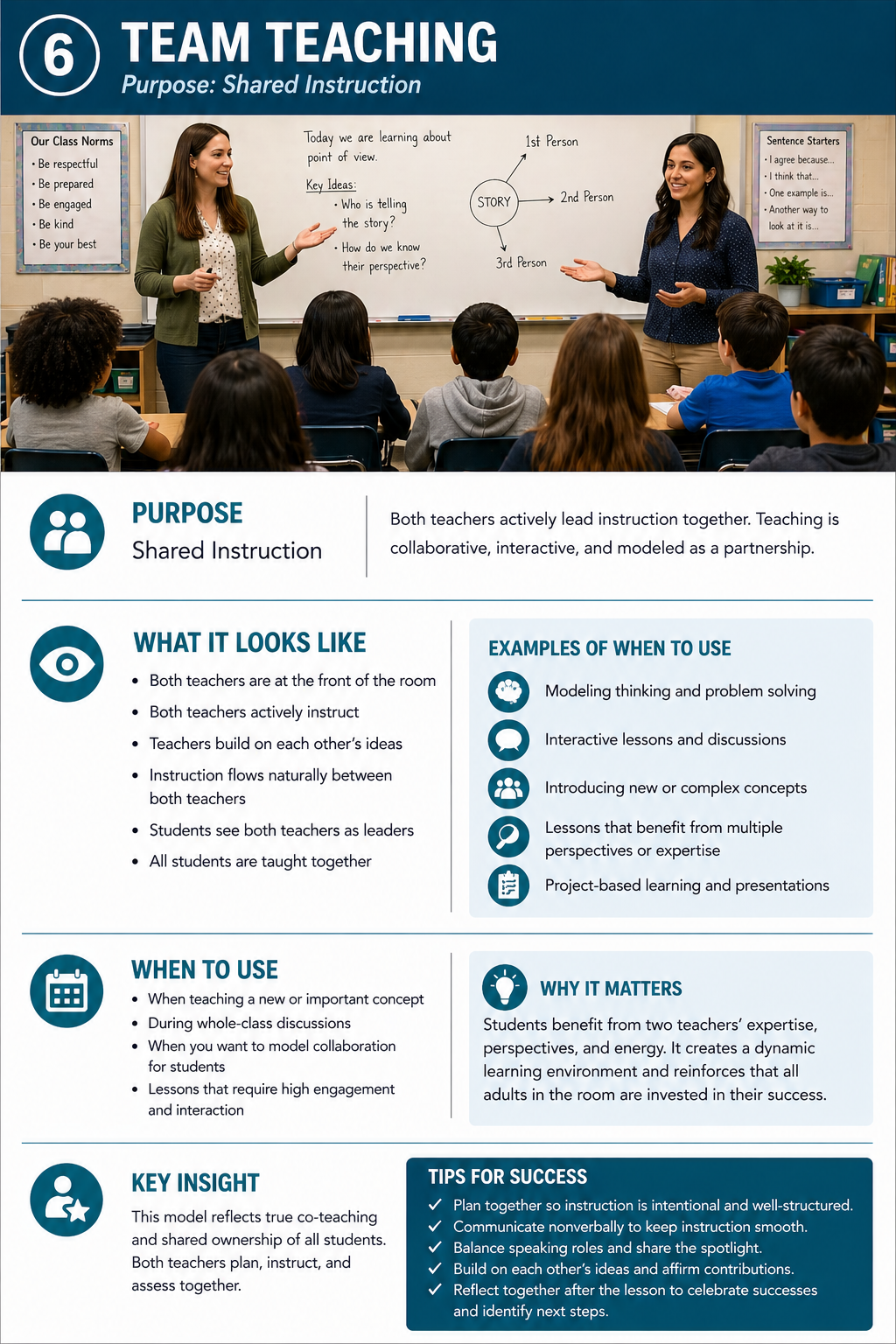
In an Integrated Co-Teaching (ICT) classroom, understanding the different co-teaching models is essential to creating instruction that is responsive, inclusive, and effective for all learners. Each model serves a specific purpose, and strong co-teaching requires intentional decision-making about when and how to use each approach based on lesson goals, student needs, and data. In this setting, both the general education teacher and the special education teacher share responsibility for planning, instruction, and student success, ensuring that all students have meaningful access to grade-level content.
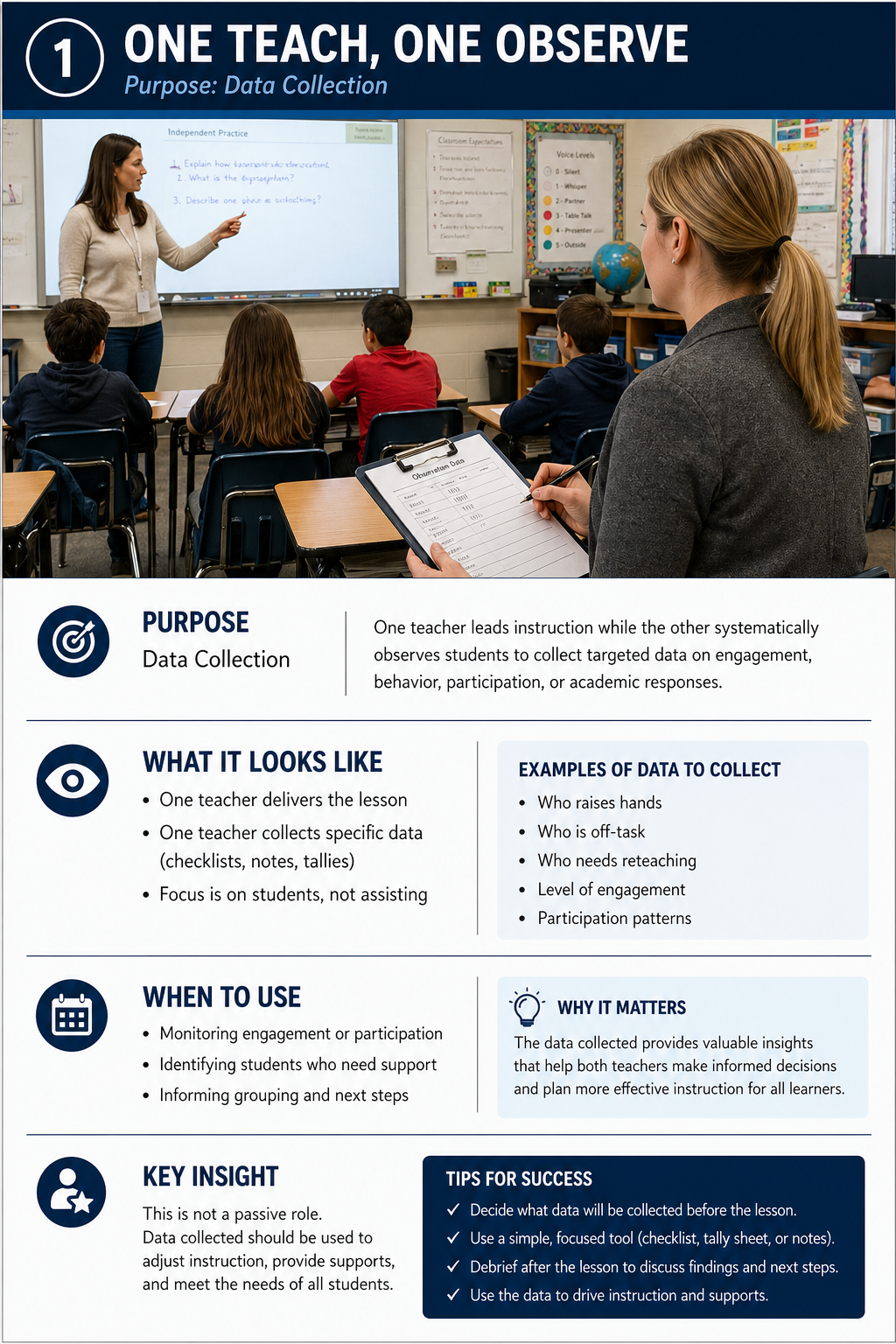
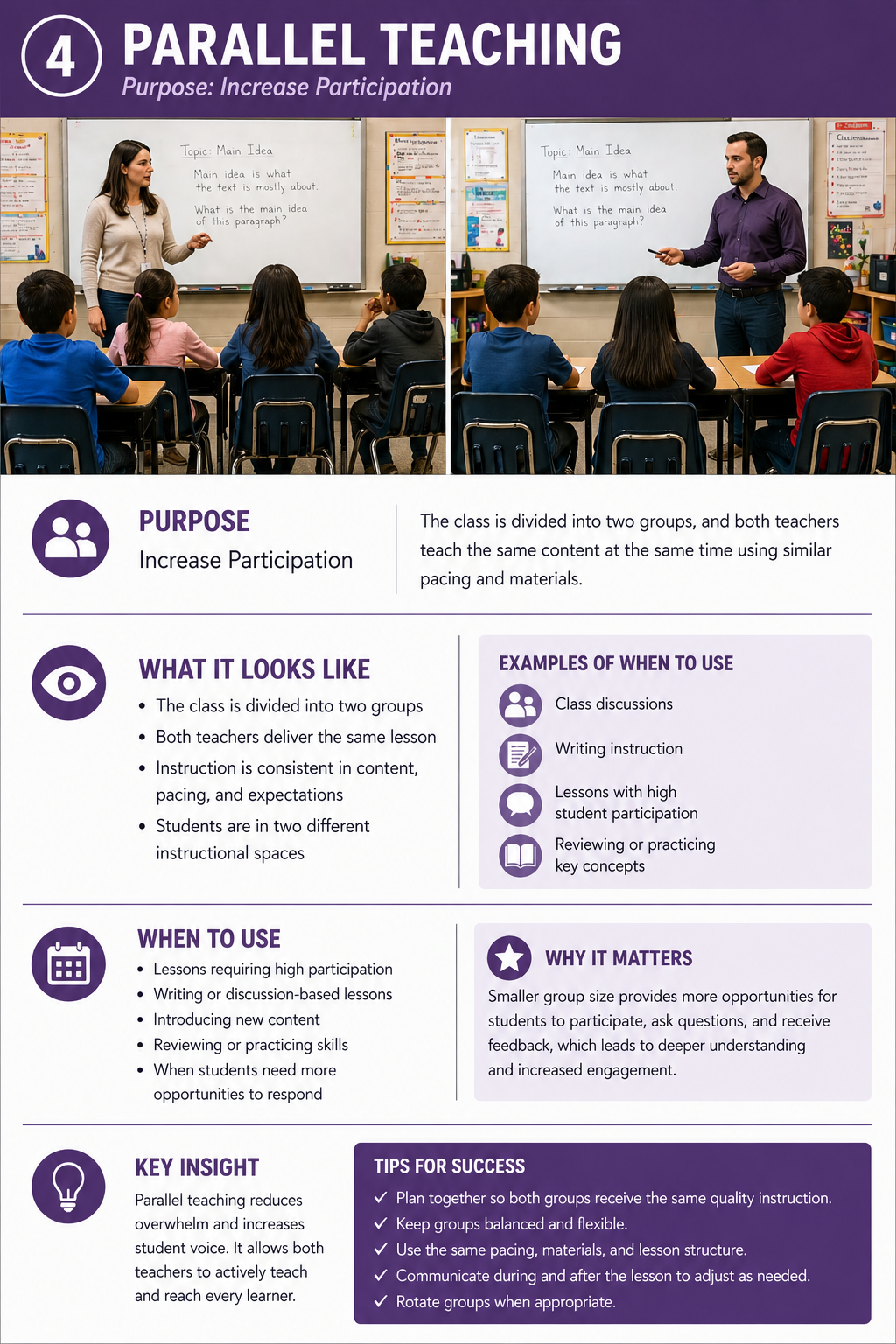
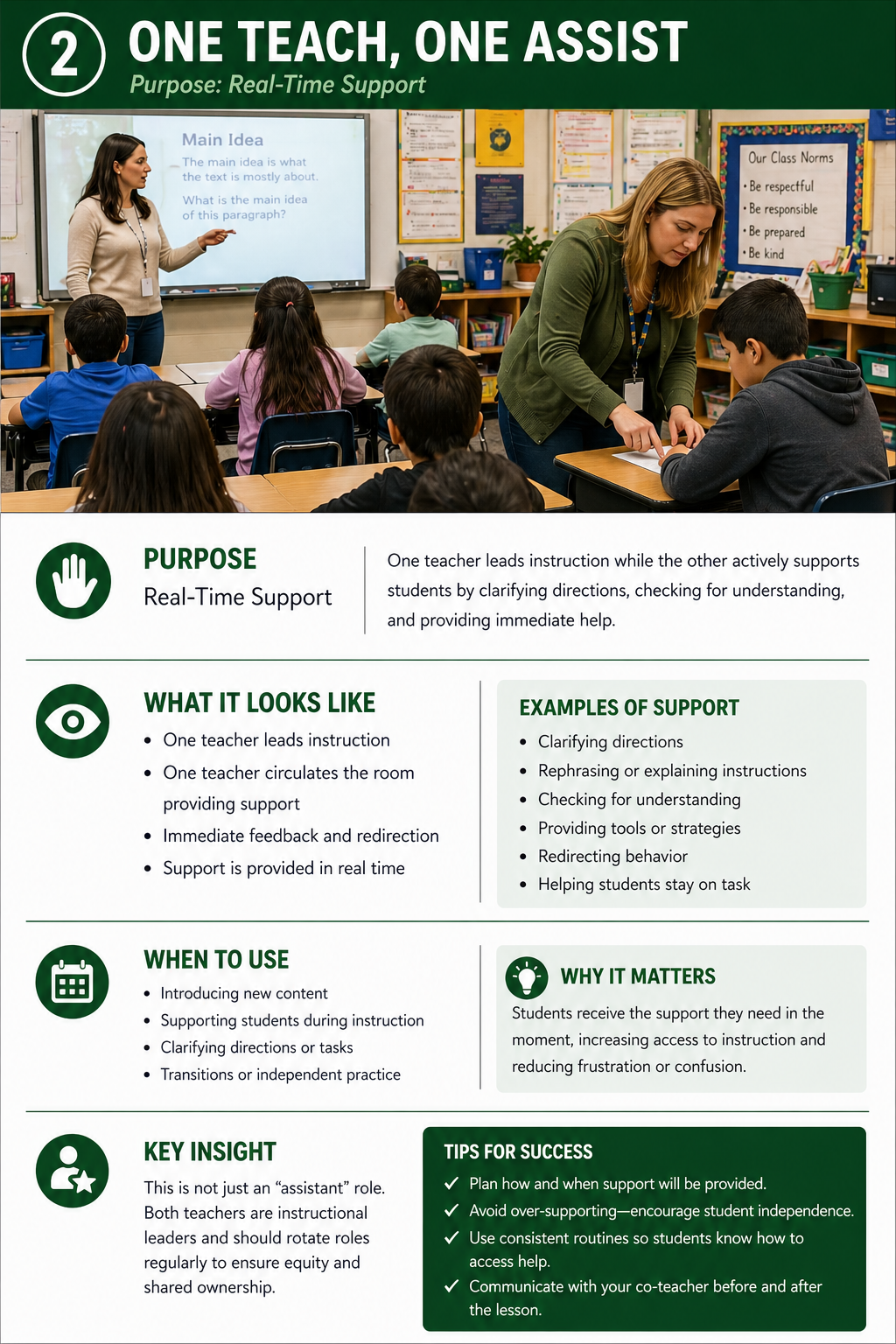
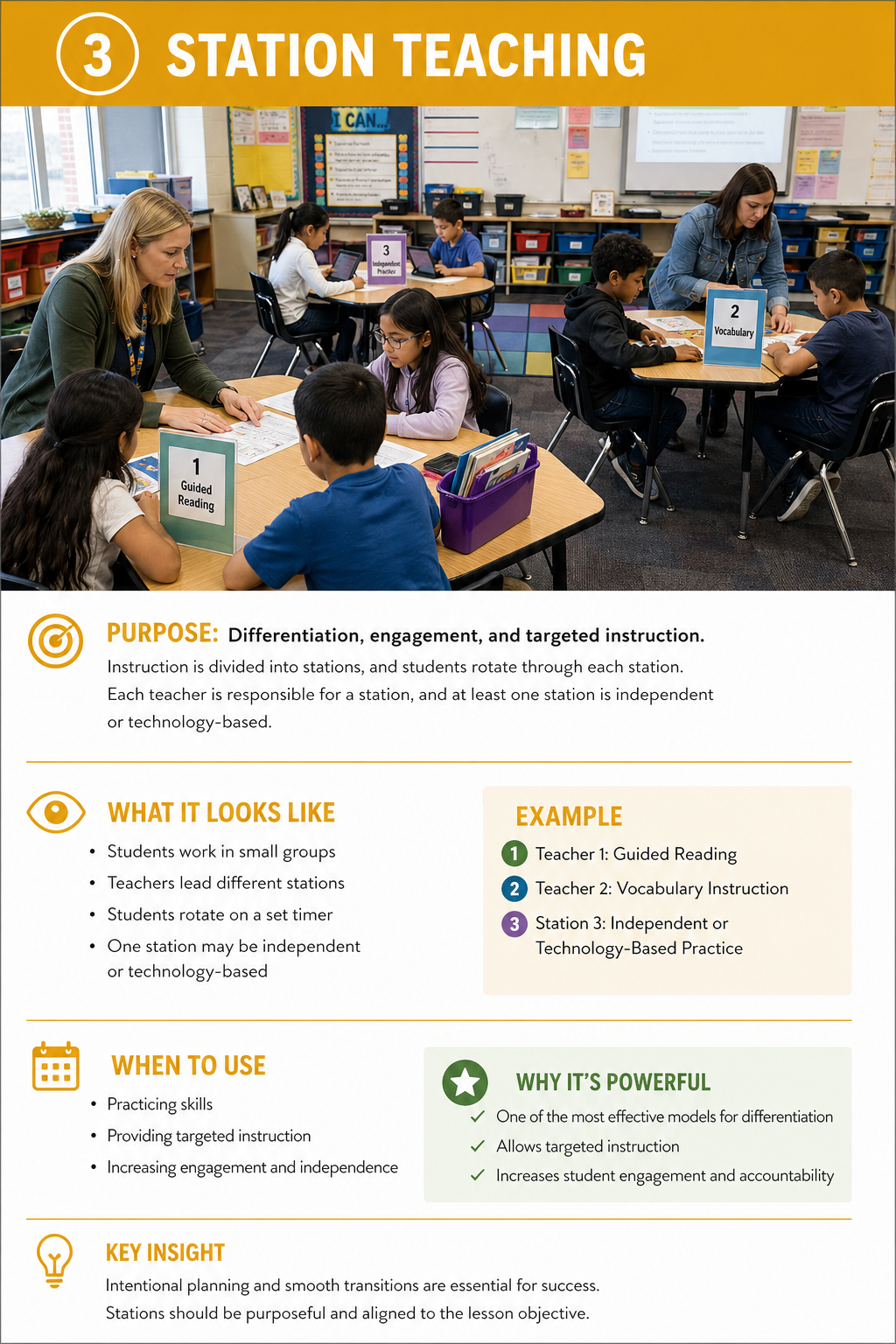
The visuals below were created by me as practical, teacher-friendly guides to show what each co-teaching model looks like in action. Drawing on research, including the University of Delaware Co-Teaching Resource Guide (University of Delaware, 2014), these infographics break down each model into clear components such as purpose, structure, and when to use it. I designed them to reflect realistic classroom practice and to serve as quick-reference tools that educators can use during planning and instruction, highlighting how co-teaching can be flexible, collaborative, and focused on meeting the diverse needs of all students.
Parallel Teaching
One Teach, One Observe
Alternative Teaching
One Teach, One Assist
Team Teaching